
Security light on, car won't start: what is going on
When the security light is on and your car won't start, the immobilizer has stepped in. An immobilizer is the anti-theft module that lets the engine run only after it receives a code it recognizes from the key. The light is the car's way of saying that check failed.
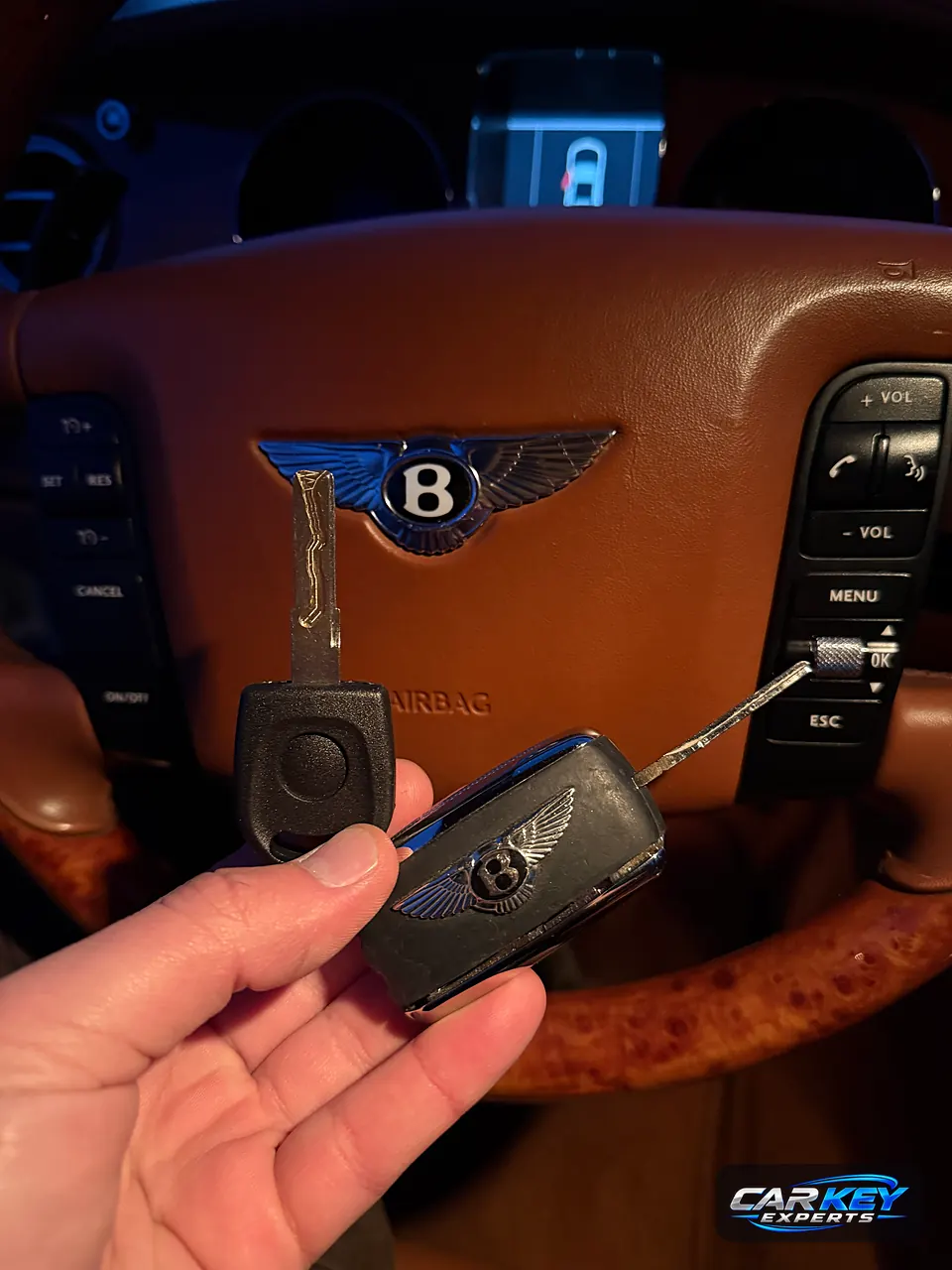
Picture a key as three working parts. The blade is cut to turn the locks, the chip carries the code the immobilizer checks, and the remote works the door locks from a few steps away. The security light concerns the chip alone. A blade can turn the ignition smoothly and the remote can still lock the doors while the chip goes unread.
On some vehicles the starter will not turn at all. On others the engine fires, runs a second or two and dies, because the immobilizer cuts fuel or spark once it finds no valid chip.
How the car reads the chip
That chip is a transponder, meaning a miniature radio part sealed in glass or plastic inside the key head, with no battery of its own. As you turn the key, a coil of wire wrapped around the ignition, called the antenna ring, powers the chip for a moment and reads its code. If that code matches one stored in the car's memory, the engine is allowed to start.
Push-button cars use the same idea at a little more distance. A proximity key, often called a smart key, is a fob the car detects by radio while it stays in a pocket or bag. When the fob battery runs low, the car may stop noticing it, so many push-button cars offer a backup reading point, often the start button itself, where the chip can still be picked up.
What is safe to check yourself
None of these checks needs tools, and all of them are safe to try.
- Try the spare key. If the spare starts the car, the chip in your usual key is damaged or has lost its programming.
- Look closely at the key head. A cracked or loose head lets the chip shift or drop out. A key that rattles, or has a corner missing, is the prime suspect.
- Take other keys off the ring. On some cars a second chip key or fob near the ignition confuses the reader.
- With a push-to-start car, press the start button using the fob itself, held flat against the button, or use the backup spot your owner's manual shows. Then put a fresh coin battery in the fob.
- Watch the dash lights. Dim lights or a starter that only clicks point to a low car battery, which can set off odd warnings.
- Think about where the key came from. A copy made at a hardware counter often has a blade that turns the ignition and a chip that was never programmed to the car.
One thing to avoid: cranking the engine again and again. Every attempt drains the battery and wears the starter, and the chip will not read any differently on the tenth try.
What the spare key tells you
If the spare works, the fault is in the other key. The fix is a new key whose chip is programmed to the car: transponder key programming for chip, flip and remote-head keys, or a replacement smart key for a push-button car.
If the spare fails as well, the cause more likely sits on the car's side: the antenna ring, the ignition, the battery or the immobilizer itself. A key that won't turn, binds or wobbles in the switch points to the ignition, a separate job explained on our ignition repair page. With only one key there is nothing to compare against, so call and describe what the dash is showing.
When to call, and what happens at the car
Call (208) 480-6980 when the spare fails too, when your only key stops starting the car, or when the key head is broken. We answer 24/7 for Nampa, Caldwell, Meridian and the rest of Canyon and Ada counties. Tell us the year, make and model, what the dash showed, and where the car is. You learn the price during that call, before anyone heads your way, along with when we can be there.
At the car, the first step is checking a photo ID against the registration or title. Programming equipment plugged into the car then shows whether it sees the chip at all. From there we make and program a new key, add a spare if you want one, and test the start, the blade and every button before leaving.
Some faults have nothing to do with the key. If testing shows the trouble is in the car's wiring or computer, we tell you plainly and explain who handles that repair. A few late-model vehicles also need dealer-only security access before keys can be programmed; if yours is one, you hear that on the phone.