
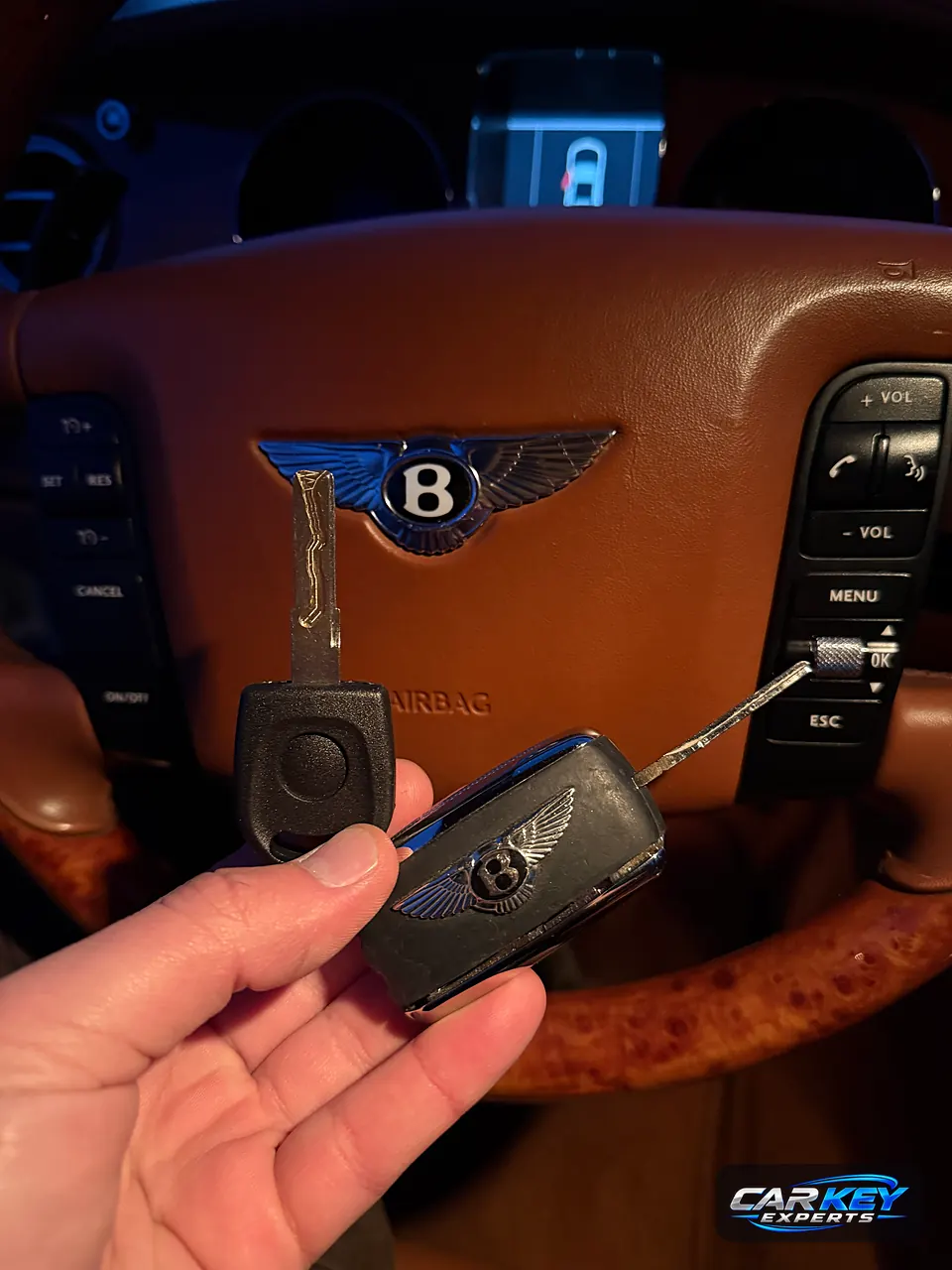
Transponder key programming where your car is parked
Transponder key programming adds a new chip key to the list of keys your car will accept. We do it at the vehicle, in Nampa, Caldwell, Meridian or anywhere in Canyon and Ada counties, and we answer 24/7.
We work on car keys only, and the cost is explained when you call, before the service vehicle sets off.
What the chip does, and why a plain copy leaves you parked
A transponder is a tiny radio chip sealed into the key head. It carries no battery: when the key turns, an antenna around the ignition sends out a brief burst of energy, and the chip uses it to answer with its code.
That answer goes to the immobilizer, the anti-theft system built into the car. A code the car was taught lets the engine run. An unknown code leaves the starter silent, or lets the engine fire and die while the security light blinks.
Seen as three parts, a plain metal copy gets one right: its blade fits every lock, but with no chip the car knows, the engine stays off.
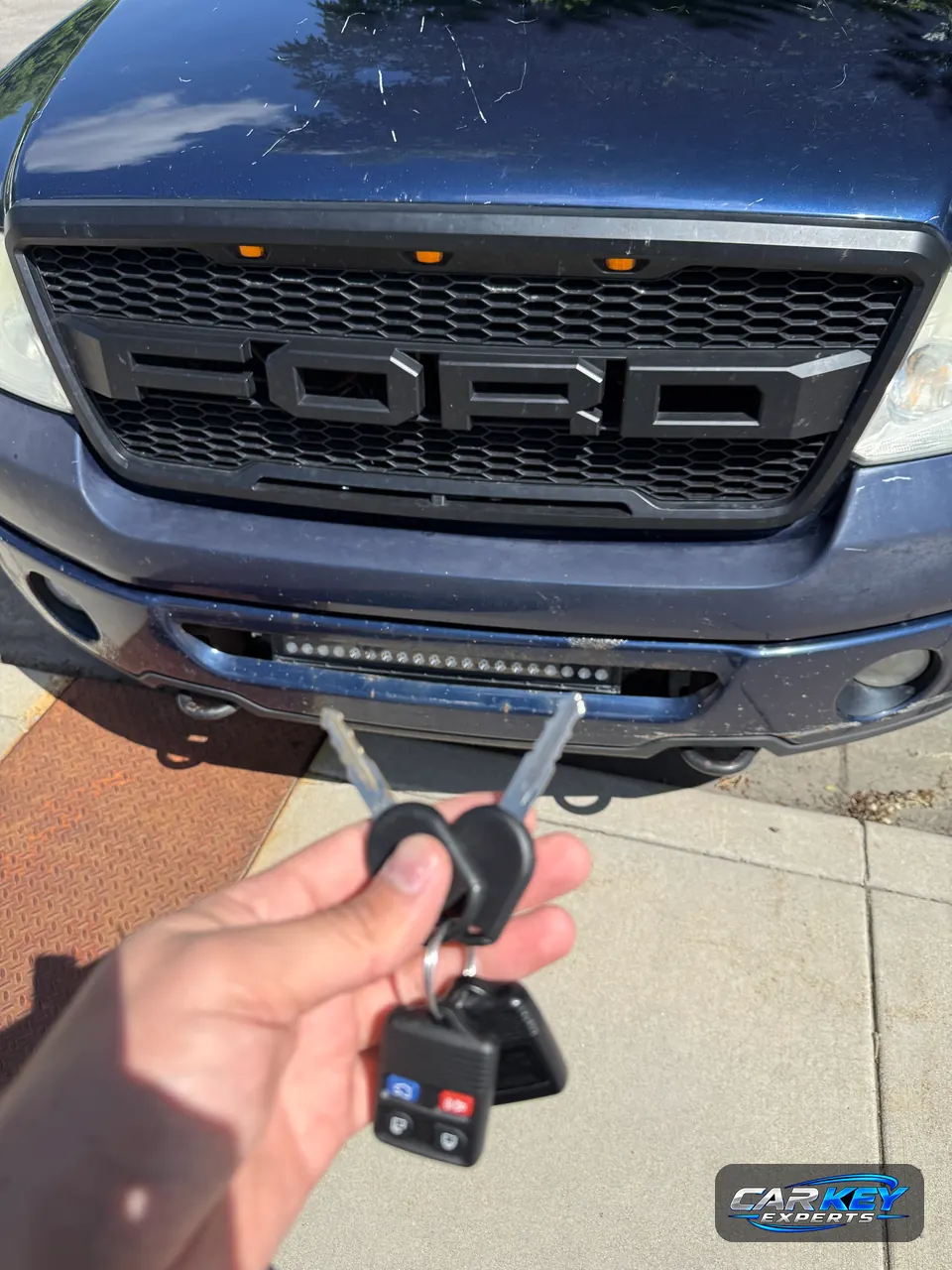
Chip key, flip key or remote-head key
Transponder keys differ in how many of the three parts (the blade that turns the locks, the chip that talks to the immobilizer, the remote) share one shell.
- Chip key: blade and chip in a plain plastic head with no buttons. It is easy to mistake for an old all-metal key, yet it is a car key with a chip inside, and any copy needs programming.
- Remote-head key: all three parts in one rigid piece, the blade always out and the chip and buttons sharing the head.
- Flip key: the same three parts, with a blade that folds into the fob and springs open at a button press. A wobbly hinge is a warning: plan a flip key replacement before the blade snaps.
Not sure which one you carry? Our guide to telling car keys apart covers every type, smart keys included.
Make families with their own habits
- Ford: most Fords from about the late 1990s on use PATS, Ford's chip system. On many models, two working programmed keys let an owner add a third using the owner's manual; with one key or none, it takes equipment. See Ford keys and fobs.
- Toyota: on many 2010s keys, the blade carries a stamped letter, such as G or H, that identifies the chip inside.
- Nissan: many models ask for a security code when a key is programmed; that code is handled as part of programming, so you don't have to track it down.
- Hyundai and Kia: on many models, programming needs a security code tied to the vehicle; we explain on the phone what yours needs.
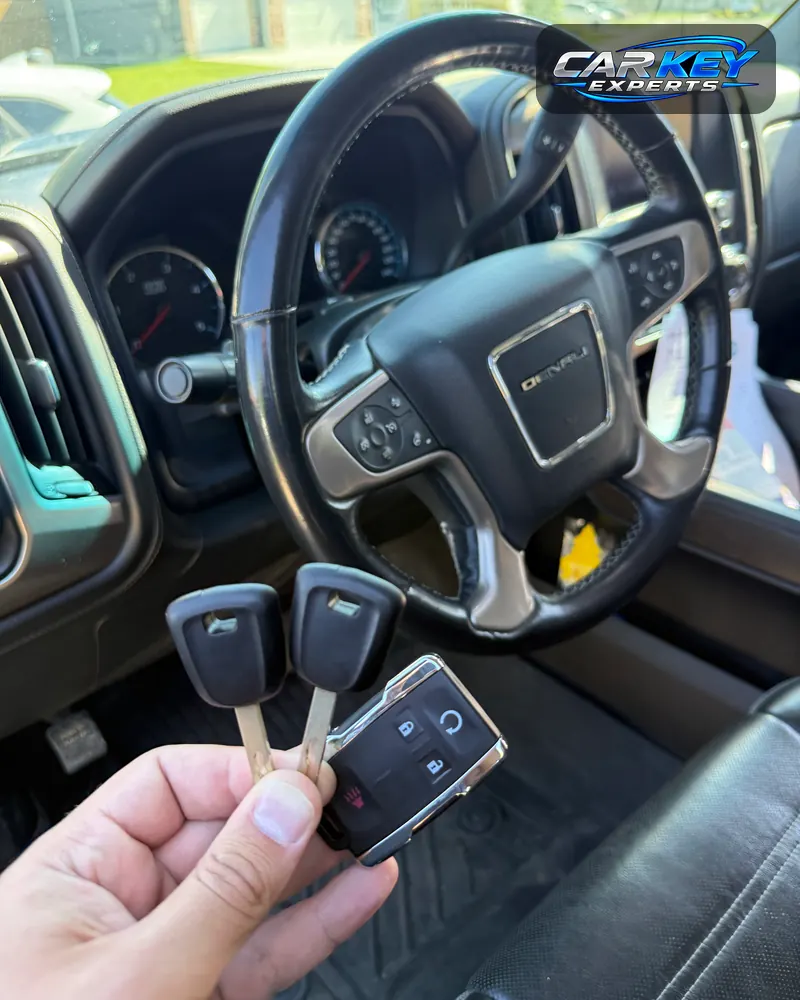
What we ask about your key on the call
- Year, make and model, where it is parked, and whether it starts with a key or a button
- Which parts your key has: a plain head, buttons, or a blade that flips out
- How many keys you need, and whether any key still starts the engine
- Your photo ID together with the car's title or registration (if the car isn't in your name, call first and we explain what's needed)
When the dealer or a mechanic is the right call
A few late-model vehicles only take new keys through dealer-only security access; we check yours on the phone, before anyone drives out.
Keys and remotes bought online are hit or miss: we check compatibility first, and since many can't be programmed, we promise nothing for them.
If the spare fails the same way, the key may be fine; read why the security light flashes. An engine that only clicks points to the battery or starter, a mechanic's work. For an extra key while one still works, see spare keys and copies.
What happens at your car
Call with the details
Name the vehicle, where it sits, and whether any key still starts it. The price comes on that call.
Ownership check
Your ID is checked against the registration or title before any cutting.
Blade cut
Cut in the service vehicle, from a working key or from the car's locks when none is left.
Chip programmed
Equipment connected to the car adds the new chip; on many vehicles, a lost key can be erased at the same time so it no longer starts the car.
Tested before we go
Each key starts the engine and works every lock, buttons included.