
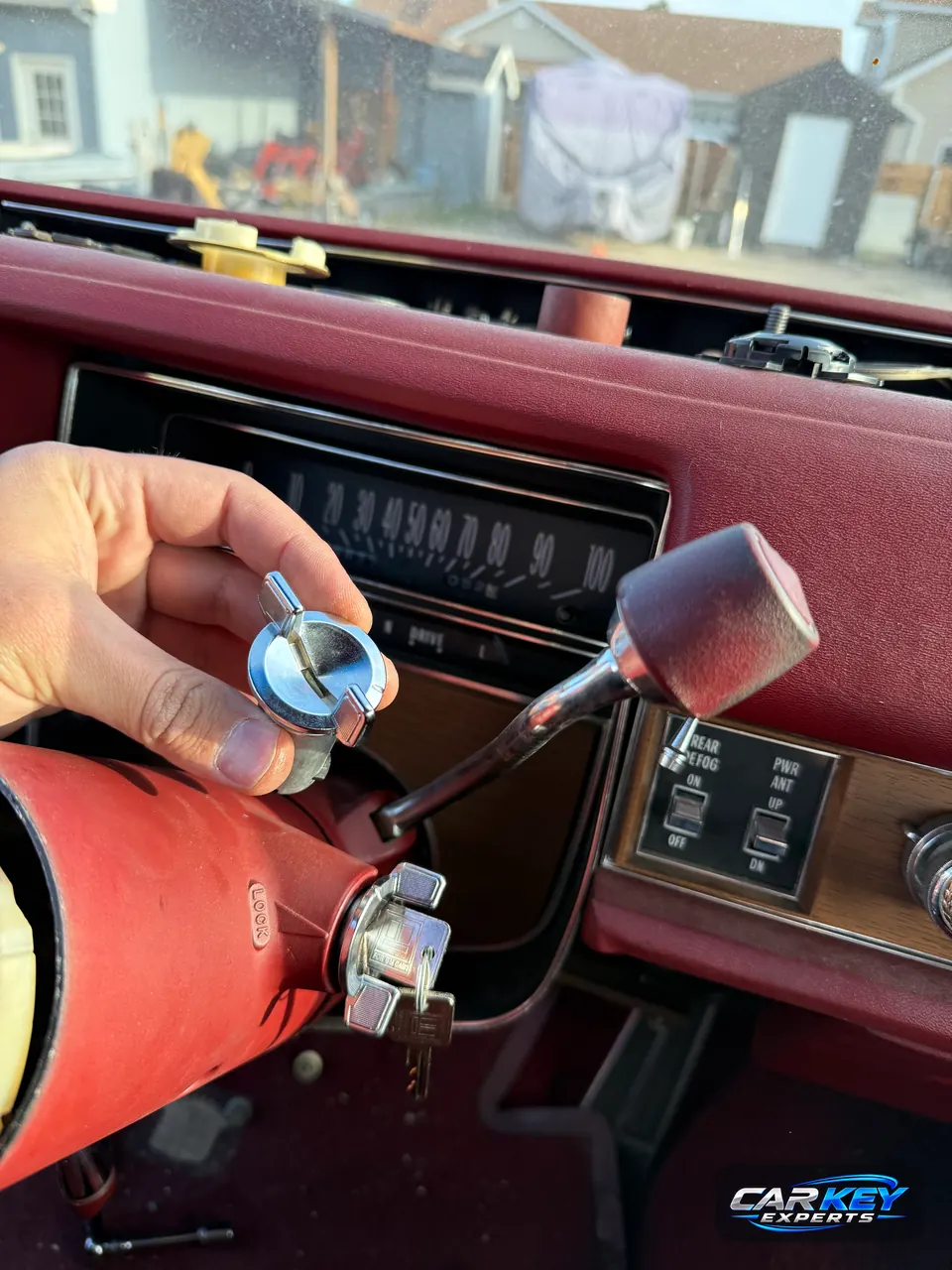
Ignition repair in Nampa, done at the car
Ignition repair covers a key that won't turn, turns only after jiggling, sticks in one position or wobbles in the slot. We come to where the car is parked in Nampa, Meridian, Kuna or anywhere in Canyon and Ada counties, and we answer 24/7.
You learn the cost on the phone, and if the cylinder needs more than the call suggested, nothing extra starts until you have heard that price too.
The blade and the wafers: how an ignition wears
Of a key's three parts, the ignition cylinder deals mostly with the blade. Inside sits a stack of small flat wafers, and each cut along the blade lifts one to a set height. With every wafer at its mark the cylinder turns; with one off, it stays put.
Blade and wafers rub at every start, so the peaks of the cuts wear round and the wafers loosen. That is a worn ignition, and it shows in stages: a key that needs a jiggle, then one that works only at a certain angle, and finally one that slides in and refuses to move.
On cars with chip keys, the face of the cylinder also holds a small antenna that reads the transponder in the key head.
Key won't turn in ignition? Check these before calling
Two things can hold an ignition that has nothing wrong with it. On an automatic, many cylinders stay locked until the shift lever is seated in P, so press the brake and move it until it clicks into place. And if you parked with the front wheels cranked over, the steering lock may be pressing on the cylinder; turn the wheel slightly in whichever direction takes the strain off, then try the key again.
Next, try a second key. When a spare that has spent its life in a drawer turns where the everyday key sticks, the blade you carry is the worn part; when both struggle, look to the cylinder. Either way, keep the force down, or a tired blade can leave a piece broken off inside the cylinder.
New blade, repaired cylinder or ignition cylinder replacement
A worn blade alone calls for a new key, with cuts taken from the lock rather than traced from the tired key, which would bring its rounding along.
A cylinder with tired wafers may be repaired; one that is badly worn or damaged calls for ignition cylinder replacement. You hear the options and their prices first.
A new cylinder can mean freshly cut keys, programmed to the car if it uses chip keys. Some older GM cars and pickups carry a small resistor pellet in the key blade (GM called it VATS), and any new key has to match it; see Chevrolet and GMC keys.
Details that help us find the worn part
- What the key does now: sticks, turns only at an angle, wobbles, or won't come out
- Whether the key head holds a chip or remote buttons, if you know
- How a second key behaves, if you have one
- The vehicle and its current location
- The car's registration or title, and your photo ID
When the ignition isn't the problem
A key that turns all the way while the engine stays off points to the chip, not the blade; if the security light flashes, start with why the security light comes on. No dash lights, or one click and then silence, usually means the car battery or starter, which is a mechanic's work.
A key snapped inside the ignition needs extraction first: that removes the metal, while ignition repair deals with a worn or damaged cylinder. On some late-model vehicles, programming keys after an ignition change needs security access only the dealer has; we tell you so before anyone drives out.
What happens at your car
Tell us what the key does
Describe the symptom, the vehicle and where it is parked; the price is explained on that call.
ID check
At the car, we start by checking ID against the registration or title.
Blade first, then cylinder
We compare each key's blade and how the cylinder answers to it, so the fix goes to the part that is worn.
Repair
A new key, a repaired cylinder or a replacement, with any change in price explained first.
Checked in use
You start the car with the finished key, and it must lock, unlock and leave the ignition smoothly before we go.