
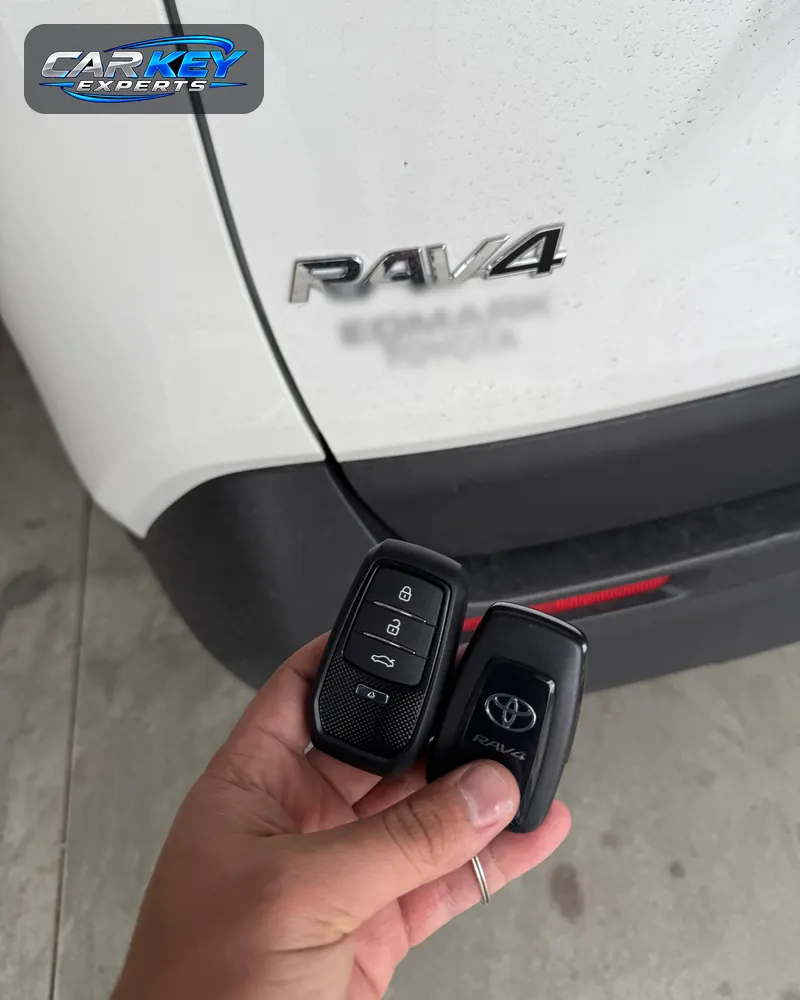
The letter on a Toyota blade
Most Toyotas from about the late 1990s on use chip keys. The chip, called a transponder, sits in the plastic head and answers the immobilizer, the anti-theft circuit that has to approve the key before the engine runs. Many 2010s Toyota keys go a step further: a letter stamped into the blade, for example G or H, identifies the chip in the head.
Check for that letter before you call: it shows the key has a chip, so a copy with only the blade cut will turn the ignition and leave the engine off. It also tells us which chip the new key must carry. No letter? The year and model still settle it, and chip key programming goes deeper.
Remote-head keys and push-button smart keys
Think of a Toyota key as three jobs: the blade opens the locks, the chip clears the engine to start and the remote works the doors and trunk. Many models carry all three in a remote-head key, where the buttons and the chip share one plastic head over a fixed blade. A Toyota key fob of that kind gets its chip and its remote programmed as two separate steps, which is why one can unlock the doors and still fail to start the car.
Many newer Toyotas use a smart key and a start button. The Toyota smart key is a proximity key: the car senses it nearby, so it can stay in a bag while the engine starts. As with most smart keys, an emergency blade is tucked inside for opening the door once the battery is dead. See push-button smart keys for how one is replaced.
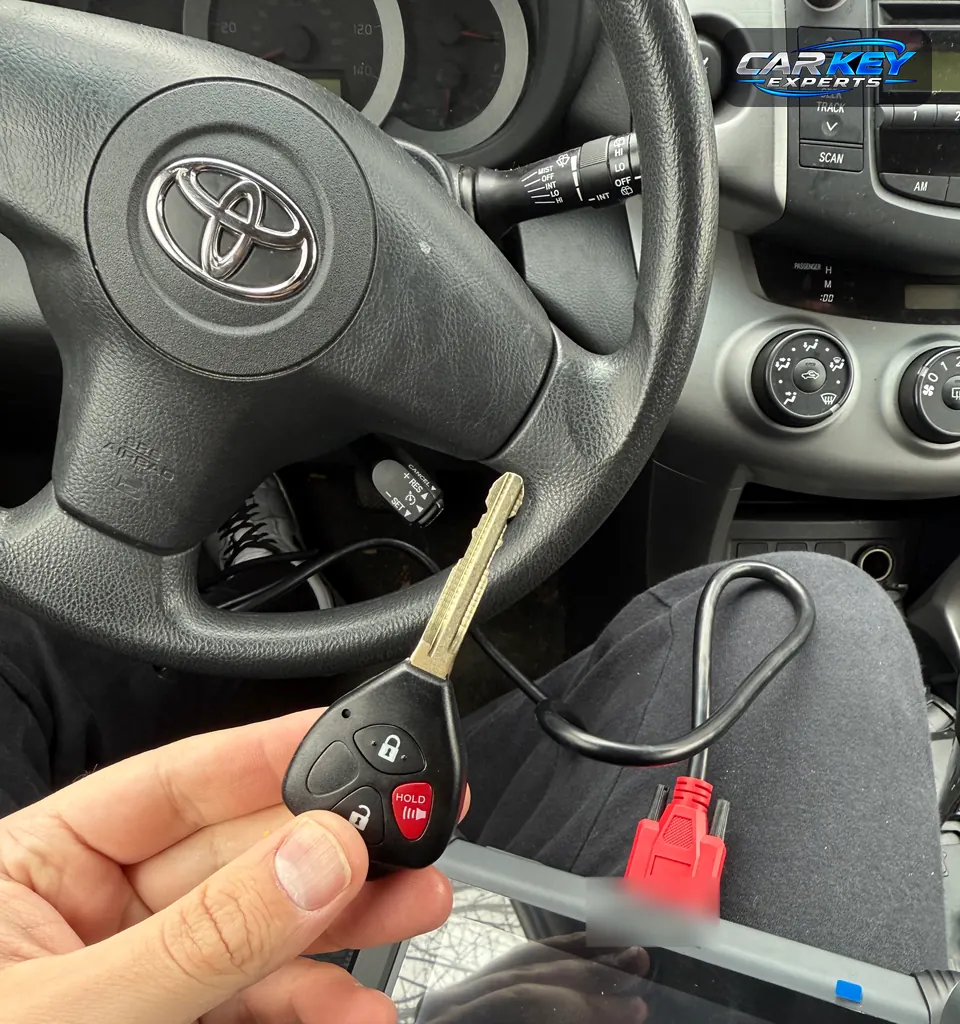
Toyota key replacement when every key is lost
On many Toyotas, a key can be made at the vehicle even with no working key on hand, though on some newer models it takes extra steps. We explain on the phone what yours involves, and the price, before anyone drives out. On many vehicles, the lost keys can then be cleared from the car's memory, so whoever finds them cannot start it. Our page on replacing a lost car key walks through the whole job.
If one key still works, a spare key or copy is the smaller visit, and it is made while the first key still starts the car. The copy needs a chip of its own, programmed to your Toyota, and we check it on a door lock and in the ignition before packing up.
Tacoma, Tundra, RAV4 and the rest
Examples include the Tacoma and Tundra pickups, the 4Runner, RAV4, Highlander and Sienna, and the Camry and Corolla. We also work on many Lexus models; call with the year and model. Tacoma key replacement at a trailhead lot, a Tundra key fob that went through the wash or a Corolla spare in a Caldwell driveway all start the same way: the year and model, how the car starts, and whether any key still works.
What to check first, and when the dealer fits
- Read the blade for a stamped letter and have it handy when you call.
- Try the spare. If it starts the car, the first key is the problem, not the car.
- Change the fob battery when the buttons only work up close.
- With a dead smart key, slide out the hidden blade to open the door.
Some late-model Toyotas can be keyed only through the dealer's own security access, and if yours is one, the phone call tells you so. Fobs bought online are checked for compatibility first; many can't be paired, so we make no promise for them. Ownership is confirmed before work starts, so have a photo ID with you, plus the registration or title.